Today’s power infrastructure is evolving rapidly in 2026, and the high voltage transformers are playing a crucial role in ensuring efficient electricity transmission over long distances, whether it is substations, industrial plants, or step-down voltage levels to meet operational demands safely and effectively.
At VCSPL, understanding transformer technologies is very crucial for delivering trusted and energy-efficient solutions.
In today’s blog, we are here to explore the importance of a high voltage power transformer, how a transformer’s high voltage system functions, and the high voltage transformer working principle that basically drives the modern electrical networks.
What is a High Voltage Transformer?
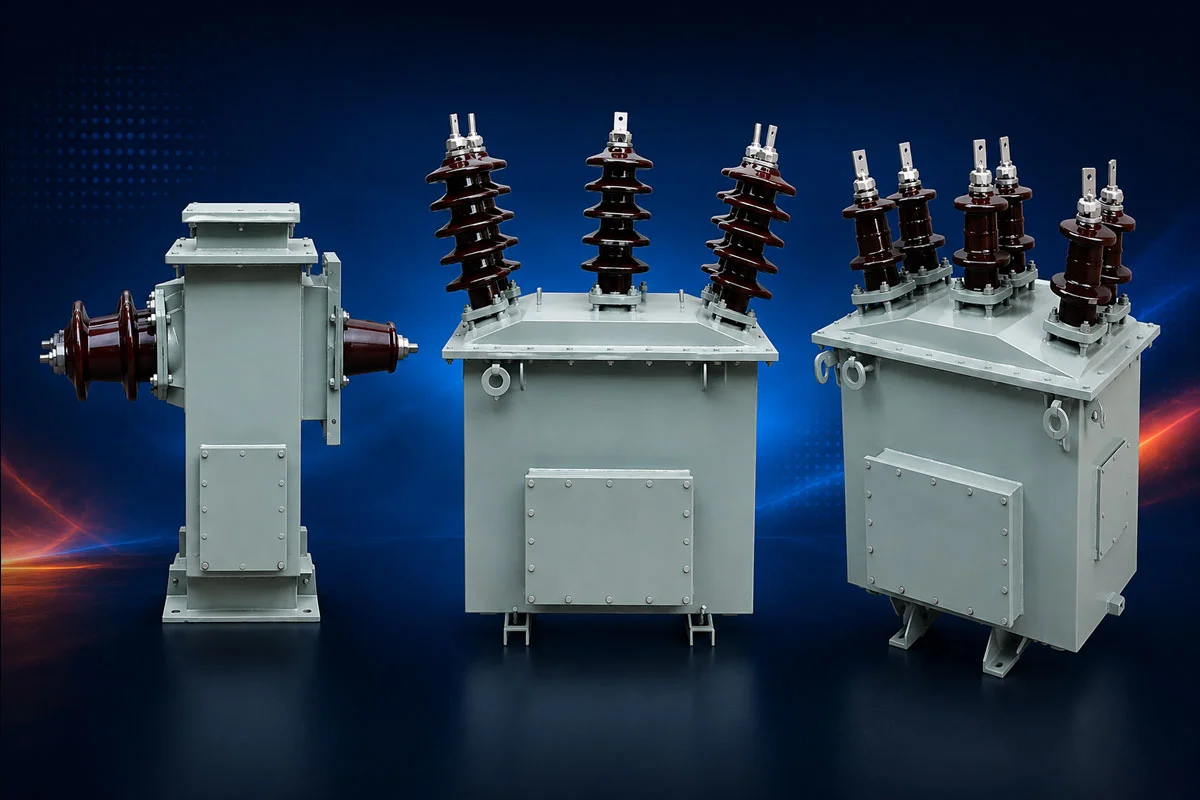
A high voltage transformer is an electrical device that is used to transfer electrical energy within the circuits through electromagnetic induction while operating at high voltage levels. These transformers are very commonly used in transmission systems to either increase or decrease voltage as the power moves from generating stations to end users.
The main aim of a high-voltage power transformer is basically to enhance the transmission efficiency, so by increasing the voltage and reducing the current the energy losses during this transmission are reduced a lot.
That is what makes the transformer high-voltage setup extremely important for utility companies and large industrial applications, these transformers are truly built to handle voltages that are above 35kV and are engineered with durable insulation systems and high-quality core materials to withstand extreme electrical stress.
Why High Voltage Transformers Are Important?
The high voltage transformer is very important in electrical grids because it allows electricity to travel long distances efficiently. Without these transformers, transmitting the electricity over power lines would lead to major energy losses.
Here’s why high-voltage power transformers are very important:
- Efficient power transmission – They reduce line losses by increasing voltage levels.
- Voltage regulation – They make sure the voltage is maintained within safe operational limits.
- System protection – They help you isolate circuits and protect electrical equipment.
- Industrial support – They supply the required power for heavy-duty industrial operations.
High Voltage Transformer Working Principle
Understanding the high voltage transformer working principle is going to help you explain why these systems are so efficient. The working principle is based on Faraday’s Law of Electromagnetic Induction. A transformer consists of two windings, which are:
- Primary winding
- Secondary winding
Both windings are wrapped around a magnetic core, where the alternating current flows via the primary winding, which basically creates a magnetic flux in the core. The magnetic field induces a voltage in the secondary winding. In case the secondary winding has more turns compared to the primary winding, the transformer increases the voltage, creating a high voltage transformer output. This is known as a step-up transformer. This high-voltage transformer’s working principle is what allows electrical utilities to transmit power at high voltages, improving efficiency and reducing losses across long transmission lines.
What Are the Different Components of a High-Voltage Power Transformer?
Magnetic Core
The core provides a low-reluctance path for the magnetic flux; high-quality laminated steel is used to reduce this energy loss.
Windings
These are made of copper or aluminum windings that work to transfer the electrical energy. Basically, the number of turns determines whether the high voltage transformer pushes the voltage up or down.
Insulation System
The insulation works to protect the windings from electrical faults and ensures there is operation when high voltage conditions occur.
Cooling System
The large high-voltage power transformers always generate high heat, so oil or air cooling systems are widely used to maintain temperature.
Tank and Bushings
The tank holds the transformer components, whereas bushings safely route conductors in and out of the electrical unit.
What Are the Applications of High Voltage Transformers?
Power Transmission
The most common use of a high-voltage power transformer is in transmission substations, where the voltage is increased before electricity is sent across long distances.
Industrial Manufacturing – Heavy industries rely on transformer high voltage systems to operate large machinery and equipment.
Renewable Energy Plants – Many solar farms and wind plants use high voltage transformers to connect generated power to the solar or wind grid.
Advantages of High Voltage Transformer
Reduced Transmission Losses – When voltage is stepped up, the high voltage power transformer helps to reduce the current flow and reduces a lot of energy loss.
Improved Efficiency – A well-designed transformer’s high voltage setting helps to increase the overall system’s efficiency.
Better Voltage Stability –The high voltage transformer’s working principle ensures a stable voltage supply across networks.
Reliable Power Delivery – High-quality transformers work to support uninterrupted electricity flow in industrial and utility applications.
How to Select the Right High Voltage Transformer?
Selecting the right high voltage transformer actually depends on factors such as:
- Voltage rating
- Load capacity
- Cooling method
- Insulation type
- Application environment
Final Thoughts!
The high voltage transformer is the support system of efficient electrical transmission and industrial power systems. For improving transmission efficiency and ensuring safe voltage regulation, the role of the high voltage power transformer cannot be emphasized more. Therefore, by understanding the high voltage transformer working principle, industries as well as utilities can optimize performance, reduce losses, and improve system reliability. As power demands continue to grow, the need for dependable high-voltage transformer solutions becomes even more critical.
At Vidyuth Control Systems Pvt Ltd, advanced transformer solutions are designed to support modern energy needs with efficiency, safety, and long-term reliability.