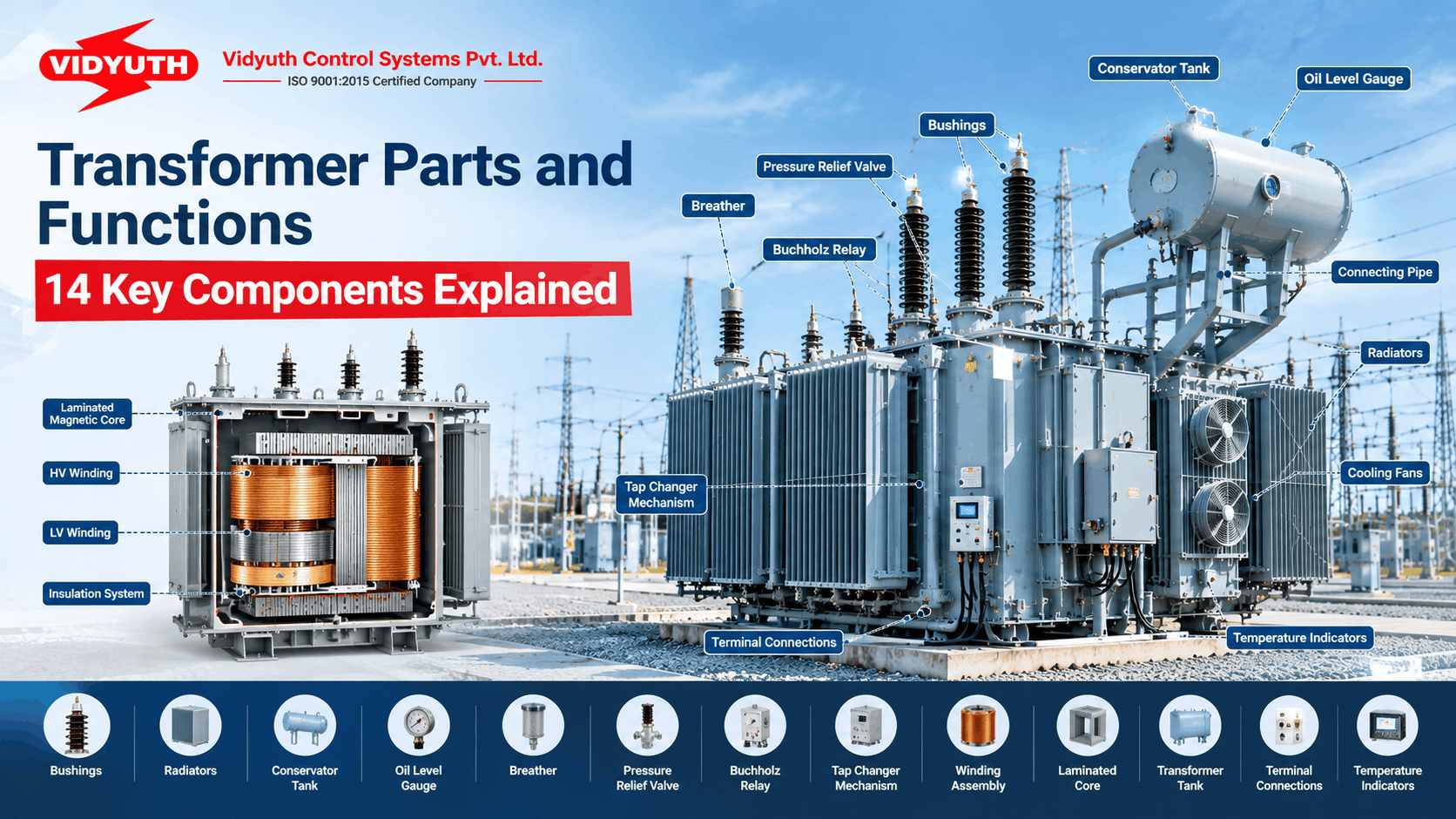
Transformers are electrical devices that transmit electric energy from one circuit to another by using the principle of electromagnetic induction. The main role played by the transformer is changing the voltage level of alternating current (AC) without changing its frequency.
Knowledge about the transformer parts is crucial since all the parts play a certain role in the operation of the transformer.
1. Transformer Core
The core itself is a magnetic substance around which the primary and secondary windings are wrapped. It ensures that there is low reluctance to the magnetic flux and improves the coupling between the windings. It is vital to note that a core is normally made using materials that do not suffer losses due to eddy currents and hysteresis. Understanding how heat is managed within the core and other transformer components is also important, particularly when considering different transformers methods of cooling used to maintain efficient and reliable operation.
2. Windings
Windings are some of the most essential parts of transformers, and they consist of primary and secondary windings made from either copper or aluminum insulated wires.
The primary winding is connected directly to the source of input voltage, and it produces a varying magnetic flux. The input voltage produced by the secondary winding depends on the varying magnetic flux. This is why a transformer increases or decreases the voltage according to the number of turns.
3. Insulation
Insulation is an important component of the transformer that insulates windings, turns, conductors, and other components of the transformer.
Insulation helps to avoid any unnecessary electrical connections in order to make the performance of the transformer more effective. Insulation adds reliability to the transformer.
4. Bushings
Bushings serve as electrical insulators through which electrical conductors pass through the transformer tank. Bushings serve to create a separation between electrical components inside and the transformer case.
Bushings have the task of providing electrical insulation between the internal and external circuits.
5. Tap Changer
The tap changer makes it possible to change the transformer turns ratio by switching the tap of the winding. This will help the output voltage of the transformer be regulated depending on changes in the input voltage and loading conditions.
There exist two types of tap changers: the on-load tap changer and the off-load tap changer. The former works while the transformer is connected to the supply, while the latter works when the transformer is disconnected.
6. Transformer Terminals
The terminal is where there are electrical connections of the transformer with other electrical circuits. The primary terminal receives electricity, while the secondary one transmits electrical energy to the load.
They guarantee safe and efficient delivery of electrical energy into and from the transformer.
7. Cooling Tubes
The cooling tubes or channels are used for the dissipation of heat generated during the operation of the transformers. These serve as an avenue for the flow of the cooling agent such as transformer oil.
For more details on cooling tubes, read our blog on transformer cooling techniques.
8. Transformer Tank
The transformer tank is the container where the important components of the transformer, like the core, winding, insulation material, and cooling system, are kept.
It provides mechanical protection to the internal components as well as protecting them from external influences and pollution. The oil in the oil-filled transformers is also kept inside the tank.
9. Breather
The breather regulates the air that enters and exits the transformer housing. The breather containing silica gel prevents moisture and dust particles from entering the transformer.
Moisture control is important because any impurities could affect the insulation properties of the oil in the transformer.
10. Explosion Vent
An explosion vent is a device that is meant to be a mechanism for releasing pressure and gases in case of any internal failure or sudden rise in pressure.
It helps in reducing the chances of damage to the transformer and other surrounding equipment.
Also read – What Causes a Transformer to blow
11. Oil Tank
Transformer oil fills the oil tank, and its role includes that of insulation and aiding in cooling of the transformer. The oil tank is supposed to have strength to bear the conditions in which it will work.
This is because the amount of oil in the tank increases or decreases depending on the temperature variations.
12. Buchholz Relay
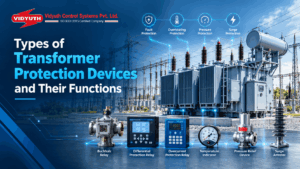
The Buchholz relay is a protection device for oil-immersed transformers. It functions by detecting the formation of gases due to the breakdown of transformer oil during faults.
Hence, it serves the purpose of giving early warning about any faults within the transformer.
13. Winding Taps
Taps on winding refer to extra terminals offered in transformer winding. Through taps, adjustment in turns ratio can be made based on voltages.
Adjusting the tap position may serve the purpose of regulating the voltage levels that might have arisen due to variations in the supply or loads.
14. Oil Conservator
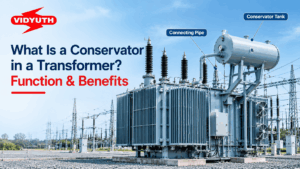
An oil conservator is an expansion tank that is joined with the main tank of the transformer oil. The chief role of this tank is to ensure that the oil level in the transformer is suitable.
Expansion and contraction of oil are taken care of by this particular tank.
Also read – Conservator in a Transformer benefits & uses
Understanding Transformer Components
The various parts of the transformer interact and do not operate independently. The core and windings facilitate the transmission of electromagnetic energy, the insulating material maintains electrical isolation, cooling materials regulate temperature, and the protective elements assist in detecting or managing any abnormality.
However, the specific configuration and construction can be varied depending on the type of transformer and its use. Readers keen on learning more about the construction of a transformer can refer to Different Parts of Dry Type Transformer.
Conclusion
The purpose of each transformer component is to ensure that there is efficient and safe transfer of electrical energy. The different components of transformers include the core and windings that make electromagnetic induction possible, bushings, cooling systems, protection equipment, and the conservator.
The knowledge about transformer parts and functions will help one understand the importance of designing, insulating, cooling, regulating voltage, and protecting transformers.
Explore Better Transformer Cooling Solutions
Understanding transformers methods of cooling is essential for maintaining safe and efficient transformer operation. At Vidyuth Control Systems, connect with us to explore transformer solutions or contact our experts to find the right components and cooling approach for your application.