In modern power distribution systems, dry-type transformers play an important role in making sure there is efficient and stable voltage conversion. Traditional oil-filled transformers are different, and these units use tough insulation materials as well as air-cooling methods, making them one of the best choices for indoor installations and environments where fire safety is a high priority.
Their rigid construction and low maintenance requirements have made them a top choice across different sectors. However, to understand how a transformer actually delivers consistent electrical performance, it is very important to check the key dry type transformer parts that work together to transfer energy efficiently. Each component works to add to the overall safety and functionality of the transformer.
Core and Windings
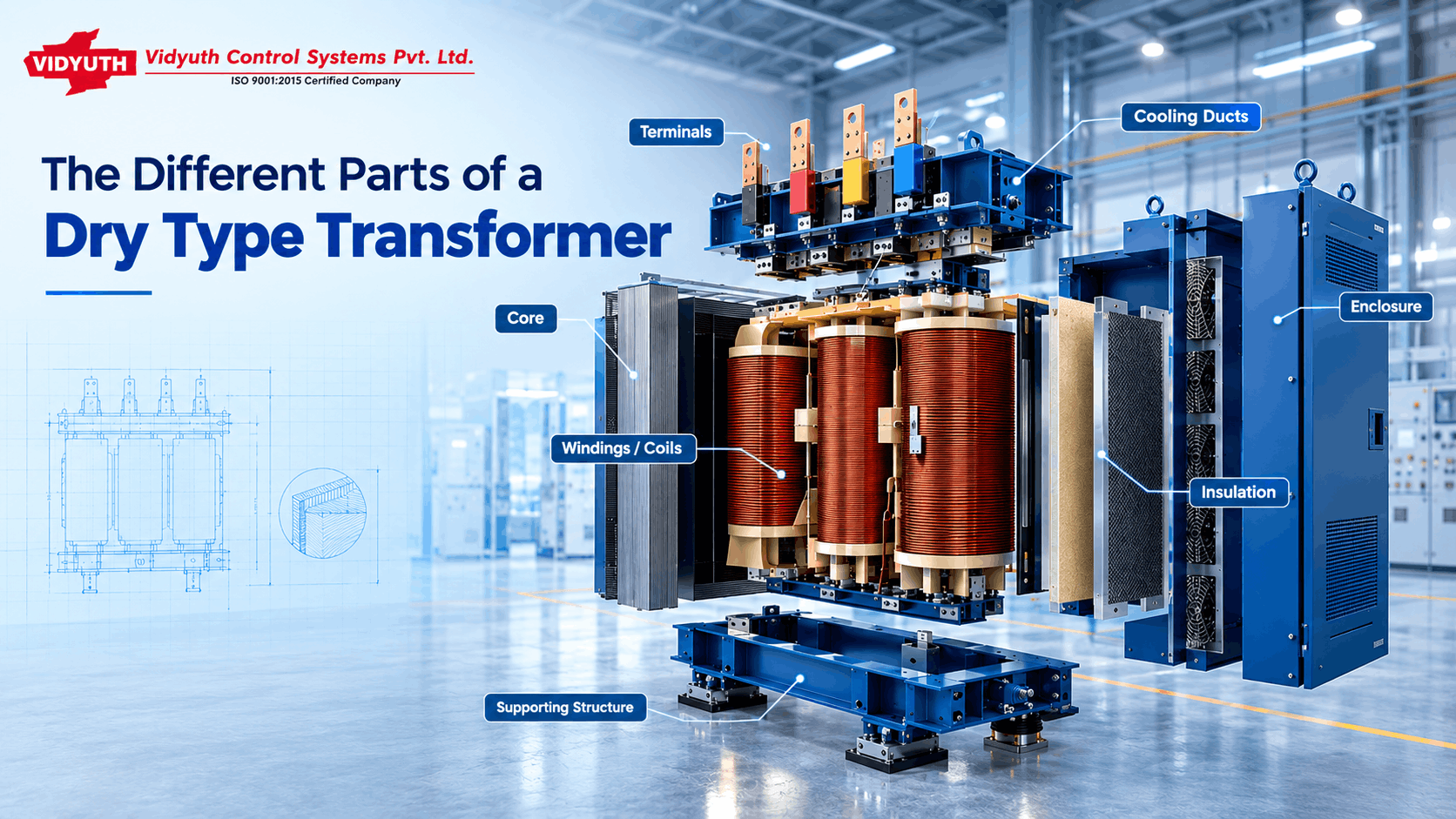
The core and windings form the most important parts of every transformer setup, as these components are highly responsible for transferring electrical energy as per the principle of electromagnetic induction. The transformer core is usually manufactured from laminated silicon steel sheets.
The laminated structure helps to reduce energy losses caused by the eddy currents and helps to improve operational efficiency. Wrapped around the core are the primary as well as the secondary windings. The primary winding receives electrical energy from the power source and creates a magnetic field. This magnetic field is what induces voltage in the secondary winding that then supplies power to the connected load. Basically, the number of turns in each winding determines the voltage transformation ratio.
Also read – Know all about High Voltage Transformer
Another important dry-type transformer part is the insulation system, since these transformers do not use any insulating oil; solid insulation materials are used to separate the windings, core, and other electrical components. If we talk about the common insulation materials, then it includes polyester varnish, Normex insulation, fiberglass composites, and other advanced insulating materials.
Insulation System
These materials help to prevent several electrical faults, reduce the risk of short circuits, and provide protection against environmental factors such as moisture and dust. A high-quality insulation system also greatly improves thermal performance and extends the service life of the transformer.
Cooling Mechanism
Heat generation is a natural result of transformer operation; to maintain optimal performance, dry-type transformers depend on effective cooling systems. Most units use natural air circulation, where warm air rises and exits through ventilation openings while cooler air enters to replace it.
This process constantly removes excess heat from the transformer unit. For applications where high power is demanded, forced-air cooling systems may be installed. These systems use cooling fans to increase airflow around the windings and core, making sure that temperatures are maintained within the operating limits.
Closed and Protective Structure
The closed structure serves as the protective outer shell of the transformer. It shields internal parts from environmental contaminants while also protecting personnel from accidental contact with energized parts.
Depending on the installation environment, the enclosures may be designed for indoor or outdoor applications. A properly designed closed structure contributes significantly to operational safety and equipment longevity. It also helps maintain airflow for cooling while providing physical protection against dust, moisture, and mechanical damage.
Terminals, Bushings, and Electrical Connections
The transformer must connect seamlessly to external electrical systems. This function is handled through terminals, bushings, and other connection components. Terminals provide secure points for incoming and outgoing electrical conductors. The bushings act as insulated pathways that allow electrical conductors to pass safely through the transformer enclosure without creating electrical faults.
Tap Changer
The voltage requirements can really change based on system conditions; a tap changer allows adjustments to the transformer’s voltage output by modifying the winding ratio. Voltage requirements can vary based on system conditions. Most dry-type transformers use de-energized tap changers that need the transformer to be disconnected from the original power source before adjustments are made. This is the feature that helps maintain accurate voltage levels while supporting system stability.
Grounding System
Safety is an important aspect in transformer design; the grounding system protects both equipment and handling personnel by simply directing current into the ground. Important grounding components consist of grounding conductors, surge arresters, and fault protection devices. All these elements help to reduce the risk of electrical shock, equipment damage, and fire hazards when there are abnormal operating conditions.
Temperature Monitoring and Protection
Temperature management is another factor that is important for transformer reliability, as modern transformers often include sensors and other protective devices that continuously monitor the temperatures. The sensors help to detect excessive heat in the windings, and they will trigger the cooling fans when necessary. Protective relays can quickly activate alarms, or they can initiate shutdown procedures if the temperatures exceed.
Bottom Line!
A dry-type transformer is built up of several carefully engineered components that work together to make sure there is safe and efficient power distribution in the system. Each and every component plays a significant role in overall performance. Therefore, understanding these dry-type transformer parts will truly help facility managers, engineers, and maybe business owners as well to make informed decisions regarding selecting a suitable transformer. By choosing high-quality transformers with dependable components, organizations can improve system efficiency, increase safety, and ensure long-term success.
Contact us today to learn more about reliable dry-type transformers and find the right solution for your power distribution requirements.