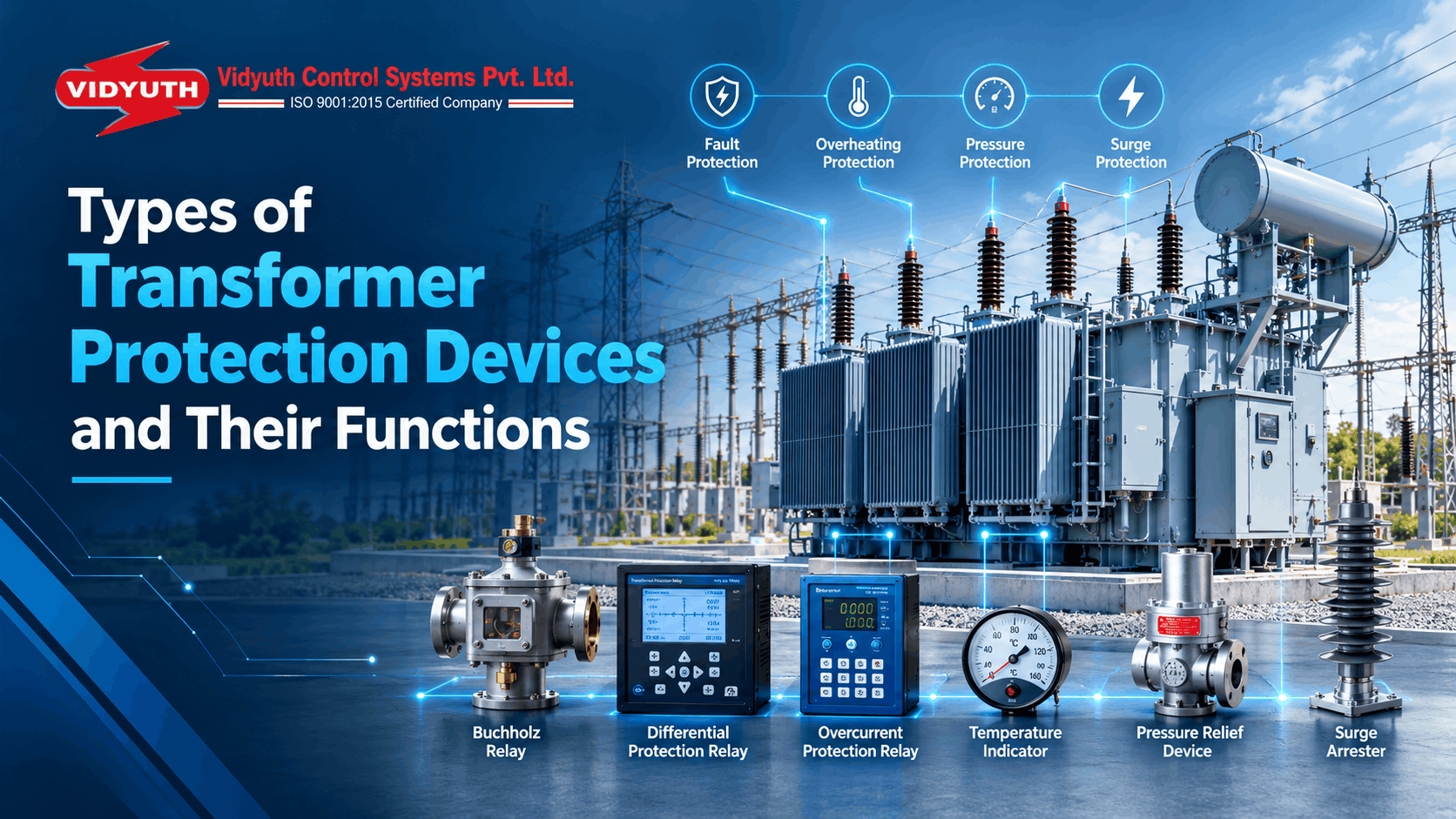
Transformers are vital components of an electrical power system, which act as agents that transfer electrical power from one circuit to another at varied voltages. As they are known to always operate under varied electrical and environmental conditions, adequate protection is required for proper functioning.
Transformer Protection Devices are meant to detect various operating parameters and react accordingly in case of abnormal situations.
These devices perform various tasks and work in tandem with each other, including the measurement of temperature, oil level, gas formation, and release of excessive pressure. Collectively, these devices help to identify the possible problems that could cause equipment failure or breakdown.
Why Do We Need Transformer Safety Devices?
A transformer could be influenced by various factors like overheating, internal problems, overpressure, moisture, and the quality deterioration of the insulating oil. If these factors go unnoticed for too long, it may lead to insulation damage, destruction of the parts of a transformer, or even operational danger.
Appropriate transformer safety devices will constantly control those factors and trigger alarms and protective measures where required.
Key Transformer Protection Devices
1. Transformer Thermometer
Monitoring of temperature is crucial for transformer protection. The thermometer gives the temperature reading of a transformer and provides both local and remote readings. In addition, it can be linked with control devices to control the temperature and the temperature alarms.
In some cases, the transformer may make use of winding thermometers that indirectly give the average and hot-spot temperature of the windings through load currents. There are also advanced fiber-optic thermometers that directly measure the winding hot-spot temperature, but they are mostly used for special purposes.
Through temperature monitoring, it becomes possible to know when there is excessive heat in the transformer.
2. Oil Pillow
The oil pillow acts as a barrier between the insulating oil and the atmospheric air. The oil pillow has a synthetic rubber bladder located on top of the insulating oil. The synthetic rubber bladder is connected to atmospheric air through the help of a silica gel-equipped respirator.
Another useful device that can be used to monitor oil level changes is the oil-level gauge. This device acts as an alarm when the oil level drops to a dangerous level. This is important since insulating oil plays a key role in the proper functioning of oil-filled transformers.
3. Oil Conservator and Desiccant
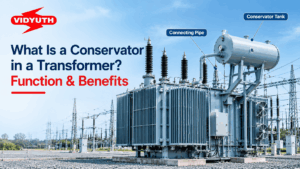
A transformer of medium or high size uses an oil conservator, which will help compensate for any changes in the volume of the oil within the transformer resulting from temperature fluctuations. It also reduces the exposure of the oil to atmospheric moisture and oxygen.
The function of the desiccant is to maintain the dryness of the air coming into the oil storage tank during changes in the volume of the oil. Silica gel can absorb moisture, and color-changing silica gel indicates when regeneration is needed.
4. Gas Relay
A gas relay is employed to monitor any abnormal condition in oil-filled transformers. In the case of an abnormal situation, the transformer oil may vaporize to form gas due to the heat generated. Gas relays are capable of detecting the condition and giving a warning.
Slow formation of gas might be an indication of an emerging problem, whereas quick formation of gas might be a sign of an internal problem. Hence, gas detection helps in fault identification.
Further information on issues associated with transformers may be obtained from our blog on Causes of Transformer to blow.
5. Pressure Relief Valve
The pressure relief valve ensures the safety of the transformer tank from any harmful internal pressure accumulation. Gases may accumulate inside the tank because of internal arcing or insulator damage. Excessive pressure must be released, as otherwise, there may be damage caused to the tank.
The pressure relief valve works by venting excess pressure at a certain threshold of pressure.
6. Pressure Reliever
A pressure reliever employs a valve mechanism that is loaded with a spring to react in case of a pressure surge in the transformer tank. When there is excess pressure in the tank, the valve opens and allows the excess pressure to be relieved. Once the pressure drops lower than the spring pressure, the valve closes.
The pressure reliever is also capable of generating an alarm signal whenever it is activated, giving time for checking what happens.
7. Online Dissolved Gas Analysis
Online dissolved gas analysis is a process that can be utilized for monitoring the health of transformer oil. The analysis can detect any abnormal presence of gases in order to determine faults in development.
8. Water Leakage Detection and Oil Level Indicator
Water content could have a negative effect on the state of transformer insulating materials and oil. Water leakage detection detects the occurrence of any water-related anomalies, while an oil level indicator monitors the oil level in the transformer.
An unusual oil level could mean a condition requiring investigation. Detecting such conditions early prevents operational issues from developing into a major fault.
How Protection Devices Work Together
However, there is no one device that can sense all possible irregularities in the functioning of transformers. Devices for monitoring temperatures detect overheating, gas devices detect gases, pressure devices work on the increase in pressure, conservators, desiccants, and oil-level detectors ensure proper oil conditions.
This gives a good protection system. Once an irregularity is detected by any of these devices, it can generate an alarm or even take actions towards protection before the problem becomes more serious.
Knowing why a transformer blows helps understand the significance of monitoring pressure, temperature, gas, and oil in a protection system.
Conclusion
Reliable protection is necessary to ensure the safety, effectiveness, and durability of transformers. Each of the elements, from thermometers and oil conservators to gas relays and pressure release systems, targets one particular risk factor associated with the operation of the transformer. Correctly chosen Transformer Protection Devices will alert the operators about any deviations and help prevent serious damage.
Choosing appropriate protection for transformers is an important part of the process of ensuring reliable and safe operations.
Protect Your Transformers with the Right Solutions
Choose reliable transformer protection devices to improve safety, prevent faults, and support long-term performance. Explore our transformer protection solutions or contact our experts to find the right protection for your application.